Adventure Picaresque Fiction
Stories of childhood, exploration, resilience and imaginative adventure represented across the current public-domain collection.
Independent digital catalogue
This library groups classic fiction and nonfiction by theme, offering four paths through the catalogue: adventure picaresque fiction, fantasy juvenile worlds, science fiction utopias, and historical psychological social fiction. Each category gathers works that share subject matter, settings, or questions, making it easier to find coherent reading lists without wading through an alphabetical list. The organization helps readers compare how different authors treat similar ideas across genres and periods. Whether you are interested in social criticism, imaginative worlds, or journeys of self-discovery, these categories provide a lens for exploring the collection. All texts are drawn from the public domain, and each record includes source attribution to support further study.
Subject gateways
Browse the collection by subject, historical setting, and type of source.
Stories of childhood, exploration, resilience and imaginative adventure represented across the current public-domain collection.
A focused group of public-domain works connected by subject, literary setting and recurring questions.
Works exploring technology, imagined futures, discovery and speculative changes in society and everyday life.
Texts connected with historical lives, social customs, institutions and the worlds in which people lived.
A closer look
One work and three nearby readings from the current catalogue.

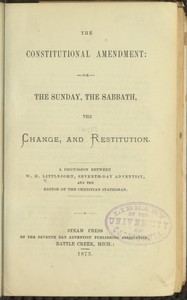
Authored by Authors: Littlejohn, Wolcott H., 1..., 'The Constitutional Amendment: or...' stands as a notable and significant work within the Adventure Picaresque Fiction category. An 1873 debate between Seventh-day Adventist W. H. Littlejohn and the editor of the Christian Statesman over Sunday laws, Sabbath observance, and a proposed constitutional amendment, drawing on biblical exegesis and political argument. It serves as a vital entry point into the broader subjects represented in our archive.
View catalogue record
Routes through the collection
Four routes into the collection for readers approaching the catalogue with different questions.
Record framework
See how records are presented and linked, without altering the represented source texts.
Connect catalogue pages to currently available files and references.
Show clear title, author, and edition details to help you find works.
Group works by recurring subjects, literary settings, and historical questions.
Explain relationships between records while preserving the original wording of source texts.
About these records
How the collection is organized, presented and corrected.
It generally means that the represented source text is no longer protected by copyright in the applicable jurisdiction or has been released for public use. Status may vary by country and edition.
A record may include the title, author, category, cover, description, edition information, source references and available reading or download options.
A category reflects a work’s principal subjects, literary setting, source type and relationship to nearby records in the collection.
The catalogue adds navigation, metadata and editorial context. The represented source text retains its wording, edition information and rights status.
Use the contact page and include the work title, page address and the exact attribution, category, metadata or source detail requiring attention.
Catalogue stewardship
Catalogue information
OQOJI Catalogue oversees the website's overall structure, which includes 99 books and 109 authors across 4 categories. They work to maintain the completeness of the collections.