Industrial Conspiracies — Background and Themes

(0 User reviews)   542
Darrow, Clarence, 1857-1938 Project Gutenberg 2009 Not confirmed
Justice, Administration of -- United States; Working class -- United States Readers of public-domain and historical texts
Project Gutenberg digital edition en

Edition facts

Words 14,083
Reading time 62 min
Text sections 2

This digital edition of Industrial Conspiracies — Background and Themes is described by source-level measurements including 14,083 words, 1 hr 2 min estimated reading time, and 2 detected text sections.

The text analysis averages about 22.9 words per sentence, while the detected sections provide another way to judge how the source is divided.

Project Gutenberg metadata also associates the work with “Justice, Administration of -- United States,” connecting these edition facts with the source record’s subject description.

Explore this collection

Compare your next read

These alternatives are selected using recorded categories and estimated reading time.

Search stored excerpts and compare books → Choose by your preferences →

How these choices and excerpts are prepared

Choices use stored catalog measurements. Estimates vary with reading speed. A shared category is a catalog label, not a claim that two books have the same argument or literary quality.

Search reads excerpt text stored with this catalog and links to its associated Gutenberg record. The connection is stored in the site database; this tool does not recheck that every excerpt is word-for-word identical to that external record. Excerpt search does not cover every chapter and does not verify historical publication dates.

Catalog snapshot checked: 2026-09-26. Coverage: 99 public books, 99 available source excerpts.

Clarence Darrow's 1912 lecture, delivered after his acquittal in the McNamara case, uses a conversational, sardonic tone to critique the U.S. legal and political systems as obstacles to justice for working people. The text's rhythm shifts from anecdotal openings to dense procedural analysis, reflecting Darrow's courtroom oratory.
Share
Editorial Edition Score 4.5/5

Calculated from edition completeness, EPUB availability, text structure and catalogue metadata. Not a user rating.

How this score is calculated
  • Description quality20 pts
  • Title & short description10 pts
  • Source metadata20 pts
  • Text length15 pts
  • Chapters / structure15 pts
  • EPUB file integrity20 pts

Total of 100 points, scaled to a 2.5-5.0 range. Editions with an empty description or a missing EPUB file are not scored.

Edition quality

Public-domain source text

Read the source text

The source text is kept in the dedicated reader, separate from this catalogue record and its commentary.

Clarence Darrow opens his 1912 lecture with a wry acknowledgment of his audience's warmth, joking that he would not mind a change of venue to Portland if tried again. This personal, almost offhand beginning quickly gives way to a pointed critique: the title 'Industrial Conspiracies' was chosen for him, and he claims he would speak similarly under any name. The shift from gratitude to sardonic commentary on conspiracy laws—citing a laborer indicted 'for the charge they always made against working men when they hadn't done anything'—establishes a voice that is both intimate and combative.

A Lawyer's Oral Cadence

Darrow's lecture is unmistakably spoken, built for the ear. He uses short, punchy sentences and rhetorical questions: 'I ought to know something about them. And I won't tell you all I know tonight, but I will tell you some things that I know tonight.' The repetition of 'tonight' creates a rhythmic anchor. Parenthetical asides—'(applause)', '(Laughter)'—are preserved in the text, marking audience reactions and underscoring his performative timing. Darrow often breaks a serious point with humor, as when he describes the Supreme Court as 'generally about a hundred years old apiece.' This oral quality means the prose is looser than written argument, with clauses strung together by 'and' or 'so,' mimicking natural speech patterns.

The Machinery of Obstruction

A central structural feature is Darrow's step-by-step dismantling of the legislative process. He enumerates the hurdles to passing an important law: a two-year congressional term, a six-year Senate term, presidential veto, and Supreme Court review. Each layer is described with escalating sarcasm. The Constitution, he notes, 'fills about ten pages' but its interpretation 'will fill a hundred volumes or more.' This procedural cataloging creates a cumulative effect—the reader feels the weight of each barrier. Darrow's pacing accelerates as he lists obstacles, then pauses for laughter lines, then resumes. The repetition of 'then you have only begun' becomes a refrain, emphasizing futility.

Shifts in Pace and Register

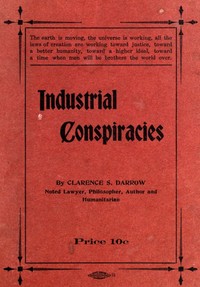
The lecture's tempo varies markedly. Early passages are anecdotal and conversational, with Darrow establishing rapport. Midway, the pace slows as he methodically explains the lawmaking gauntlet. Later, he returns to broader declarations: 'the earth is moving, the universe is working, all the laws of creation are working toward justice.' This shift from cynical proceduralism to almost prophetic optimism is abrupt. The publisher's note frames the speech as occurring after Darrow's 'triumphant acquittal' in the McNamara case, a context that may explain the alternating tones—defensive humor, analytical critique, and utopian hope. The text's brevity (under 15,000 words) means these shifts feel compressed.

Readers should attend to Darrow's use of repetition and parenthetical audience cues as markers of live delivery. The lecture's structure—personal opening, procedural critique, philosophical close—mirrors a courtroom summation. Because the excerpts omit the full argument, note how Darrow balances specific legal references with broad appeals to justice. His voice, at once folksy and learned, is the primary vehicle for his critique of power.

After finishing Darrow’s lecture, I kept thinking about how slowly the weight of it settles—not angry, just tired and clear. That same unhurried ache lives in Social legislation and social activity — Key Ideas to Explore, which feels less like a call to arms and more like a long exhale over what justice could quietly mean.

There are no reviews for this eBook.

0
0 out of 5 (0 User reviews )

Add a Review

Your Rating *
There are no comments for this eBook.

Reader reflection

What was your reading experience?

Capture what you thought, learned, and would like to remember.

Your progress 0 / 10
1

Which reading stage best describes you?

2

How much did you enjoy the reading experience?

3

How likely are you to recommend this book?

4

How easy was the book to follow?

Related eBooks