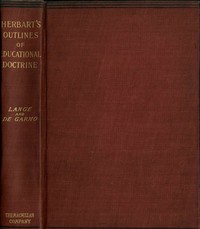
Outlines of Educational Doctrine by Johann Friedrich Herbart
If you’ve ever sat through a class and felt your brain drift off like a bored puppy—*Outlines of Educational Doctrine* by Johann Friedrich Herbart explains why that happens and how to fix it. For anyone into teaching, parenting, or simply understanding how you got to *be* you, this old book is a goldmine. Herbart, writing in the 1800s, saw weaknesses in the way we shove knowledge into kids. Instead of punishment or praise alone, he thought educators should focus on interest—true, driven curiosity that makes learning addicting. And the magic step (the part most people miss): he ties this to character. Learn something about history? He’d want you to feel the ethics. Tones rigid. But his ideas here quietly support how modern teachers build background.
The Story
Herbart doesn't spin a fictional legend—this is an essay. The story inside is the struggle of education to do its job. He walks the reader through concepts: time doesn't cure aimlessness; you need aims drawn from ethics (yes—real ethics) and you need to know apperception—your brain constantly connecting new info to what it already knows. Each chapter is a layering: nurture widening interest, sequence disciplines—history before literature, scientific observation before philosophy. The tensions surface as he confronts his era's memory-crunch, empty memorization. He proposes “many-sidedness of interest” as the target—stuff learning sticks when it ropes in ethics, group action, even religious reflection. Minimal and abstract summary: he built a clear diagram for becoming someone steady, aware, and genuinely intelligent through guidance, not drudgery.
Why You Should Read It
The hook today? We run away from hard science in schools (alongside loud disputes about core knowledge). Herbart steps in not like a dry professor but like the thoughtful coach tapping your plans. When I read his talk about giving kids “deep apperceptive masses” before advanced ideas, I finally understood why early subjects feel random, if they feel random. His views on instruction being the shaping of conduct sound more current than curriculum maps barely five years old. Zero fluff: Kids aren’t to be poured—from. Hermetic. The book's real charm lies in how he loves ignorance-to-insight curiosity. Chapter “Ethical Instruction” pushed time to stop placating but demanding self rule. Surprisingly caring but tough. This was a man impatient with superficial show. In every sense, these ideas point outward. Could help mend frustrating learner indifference. Vitality there.
Final Verdict
Perfect for any teacher weary from teaching bare facts; parent trying for deeper conversations—that history child has; high schooler wanting clarify boring subject order. Because Herbart wrote for teachers, some parts get deep—though his sharp examples stay urgent today. Yes, style heavy prose pedality, but patience rewards nicely radical views. Are you someone less pedagogical lecture and moral wrestling? Prophesy reading enjoyment shave quickly—it promises interior rediscovery why education matters. Stay classic matchmaking practical reformers rare. Tries beautiful magic cultivating a fully aware student mind plus sound moral decent uprightness. Entire books century written capture crumb of range found carefully over and distinct here. Claim class: teaching—never alone disconnected soul and society.
This content is free to share and distribute. Feel free to use it for personal or commercial purposes.