
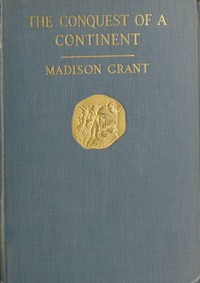
The Conquest of a Continent; or, The Expansion of Races in America by Madison Grant
Let's talk about a book that's more of a historical artifact than a simple read. 'The Conquest of a Continent' is Madison Grant's attempt to tell the entire story of who settled North America and why it matters. He walks us from the first colonies on the East Coast, across the frontier, and all the way to the Pacific, tracking every wave of migration. But he's not just tracking people; he's sorting them into categories based on where their ancestors came from in Europe.
The Story
The plot, so to speak, is the spread of European settlers across the continent. Grant lays it out like a grand, inevitable march. He details which groups—English, Dutch, German, Scandinavian—settled which regions and how their particular traits, in his view, built the nation. The conflict driving his narrative is the struggle to keep this settlement 'pure' and directed by the 'right' kind of people. He sees the closing of the frontier not just as a geographical event, but as a crisis point for the racial makeup of the country. The final chapters are a warning, arguing that without strict immigration controls, the nation's founding stock would be diluted and its greatness lost.
Why You Should Read It
You should read this not because Grant's ideas are good or right—they are deeply, morally wrong—but because they were incredibly influential. This book was a cornerstone of the eugenics movement. Its ideas didn't stay on the page; they helped shape U.S. immigration laws like the 1924 Immigration Act, which severely restricted who could come to America. Reading it firsthand is chilling. You see how pseudoscience and prejudice were woven together into a persuasive, hateful theory that called itself history. It gives you a raw look at the intellectual roots of racism that we're still grappling with today. It’s a tough, uncomfortable experience, but it explains so much.
Final Verdict
This book is not for casual readers looking for a fun history. It's essential reading for anyone seriously interested in 20th-century American history, the history of racist ideology, or the power of bad ideas. It's perfect for history buffs, sociology students, or readers who want to understand the dark undercurrents of the 'American dream' narrative. Consider it a primary source from a bleak chapter of thought, and pair it with modern scholarship that dismantles its every claim. Approach it with a critical mind, but don't look away.
You are viewing a work that belongs to the global public domain. Distribute this work to help spread literacy.
Emily Johnson
1 month agoIt took me a while to process the complex ideas here, but the inclusion of diverse viewpoints strengthens the overall narrative. The insights gained here are worth every minute of reading.
Ashley Robinson
2 months agoVery interesting perspective.








Michael Davis
1 month agoI particularly value the technical accuracy maintained throughout.