
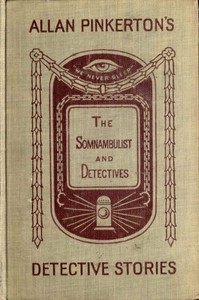
The Somnambulist and the Detective; The Murderer and the Fortune Teller
So, you pick up a book by Allan Pinkerton. You're not just getting a story; you're getting a case file from one of America's first real detectives. This book is actually two separate narratives bound together, but the title story, 'The Somnambulist and the Detective,' is the real standout.
The Story
Pinkerton is called in to investigate a shocking murder. The evidence seems to point squarely at one man. But here's the catch: this man is a known sleepwalker. His defense is that he was in a state of somnambulism—completely asleep—when the crime occurred, and therefore cannot be held responsible. Pinkerton has to untangle this mess. Did the man's sleeping self harbor violent urges? Or is this an incredibly cunning murderer using a medical condition as a shield? The investigation is a slow burn, following leads, interviewing witnesses, and piecing together a timeline of events both waking and sleeping. It's a race to find the truth before an innocent man is condemned or a guilty one walks free on a bizarre technicality.
Why You Should Read It
This isn't a slick, modern thriller. The charm is in its authenticity. You're seeing detective work in its infancy. Pinkerton's methods—observation, deduction, patient legwork—are the foundation everything else was built on. Reading his direct account feels like looking over his shoulder. The central question of the sleepwalker's guilt is fascinating. It forces you to think about consciousness, intent, and where we draw the line of criminal responsibility. Is the person who commits an act in their sleep the same 'person' who wakes up? The book doesn't give easy answers, which makes it so compelling to think about long after you finish.
Final Verdict
This book is perfect for history buffs who love true crime, and for mystery fans who want to see where the genre started. If you enjoy shows or books that explore the 'why' and 'how' of investigation as much as the 'who,' you'll get a kick out of this. Be ready for the style—it's very much a 19th-century report, not a novel. But that's its strength. You're not reading a fictionalized version; you're reading the real deal from the man who was there. It's a unique and captivating slice of criminal history.
This historical work is free of copyright protections. Feel free to use it for personal or commercial purposes.
Margaret Walker
1 year agoJust what I was looking for.
Noah Davis
2 months agoHaving read this twice, it creates a vivid world that you simply do not want to leave. Don't hesitate to start reading.
Sandra Young
1 year agoClear and concise.
John Moore
9 months agoGood quality content.



Joshua Nguyen
11 months agoSurprisingly enough, the depth of research presented here is truly commendable. Absolutely essential reading.