About 461 minutes
Three years in California [1851-54] — Themes and Context
Historical Psychological Social Fiction
105,988 recorded words. 3 minutes difference from this book's estimate.
View Gutenberg source #76244
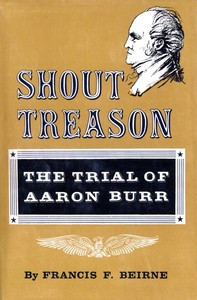
For Shout treason — Edition Insights, the stored edition analysis reports 105,224 words, 7 hr 38 min estimated reading time, and 28 detected text sections.
The text analysis averages about 20.1 words per sentence, while the detected sections provide another way to judge how the source is divided.
Project Gutenberg metadata also associates the work with “Burr Conspiracy, 1805-1807,” connecting these edition facts with the source record’s subject description.
Explore this collection
These alternatives are selected using recorded categories and estimated reading time.
About 461 minutes
Historical Psychological Social Fiction
105,988 recorded words. 3 minutes difference from this book's estimate.
View Gutenberg source #76244About 465 minutes
Historical Psychological Social Fiction
106,921 recorded words. 7 minutes difference from this book's estimate.
View Gutenberg source #101About 416 minutes
Historical Psychological Social Fiction
95,621 recorded words. 42 minutes difference from this book's estimate.
View Gutenberg source #71106Search stored excerpts and compare books → Choose by your preferences →
Choices use stored catalog measurements. Estimates vary with reading speed. A shared category is a catalog label, not a claim that two books have the same argument or literary quality.
Search reads excerpt text stored with this catalog and links to its associated Gutenberg record. The connection is stored in the site database; this tool does not recheck that every excerpt is word-for-word identical to that external record. Excerpt search does not cover every chapter and does not verify historical publication dates.
Catalog snapshot checked: 2026-09-26. Coverage: 99 public books, 99 available source excerpts.
Calculated from edition completeness, EPUB availability, text structure and catalogue metadata. Not a user rating.
Total of 100 points, scaled to a 2.5-5.0 range. Editions with an empty description or a missing EPUB file are not scored.
Public-domain source text
The source text is kept in the dedicated reader, separate from this catalogue record and its commentary.
Francis F. Beirne opens Shout Treason by noting that, aside from a stenographic report and a small volume from nearly a century earlier, no work had focused solely on Aaron Burr's 1807 trial for treason and high misdemeanor. He positions the trial as the climax of Burr's public career and the most dramatic case in American jurisprudence, featuring a former vice president as the accused, Chief Justice John Marshall presiding, and distinguished lawyers on both sides. Beirne acknowledges leaning heavily on Albert J. Beveridge's biography of Marshall for legal technicalities, but aims to reach a general reader by stripping away confusing details while maintaining historical accuracy.
Beirne emphasizes the trial's human and spectacular qualities. The setting—Richmond in spring and summer 1807—and the presence of national figures made it a spectacle. The prosecution and defense featured leading attorneys of the day, and the charge of treason against a former vice president drew intense public interest. Beirne's narrative highlights the courtroom drama and the high stakes for Burr, whose public career hung in the balance.
Beirne devotes considerable attention to Harman Blennerhassett, a key figure in the conspiracy. He describes Blennerhassett as a man who had "every sort of sense except common sense," a phrase from his partner Dudley Woodbridge. Blennerhassett's background—born in England, educated at Westminster and Trinity College Dublin, a lawyer who inherited estates—contrasts sharply with his later predicament. His marriage to his niece Margaret Agnew caused a family scandal, leading the couple to flee to America. They settled on an island in the Ohio River, where they built a lavish estate with a white mansion, formal gardens, and slave quarters. This idyllic setting became entangled in Burr's alleged conspiracy, landing Blennerhassett in a Richmond penitentiary facing treason charges.
Beirne acknowledges his debt to Beveridge's scholarly treatment of the trial, which is "buried in the middle" of his life of John Marshall. He aims to extract the trial's drama for a broader audience while maintaining historical accuracy. The work includes a bibliography and index, suggesting a careful approach to sources. Beirne's focus on the trial as a climax suggests he views it as pivotal in understanding Burr's career and early American legal history.
Readers should approach Shout Treason as a narrative history that prioritizes clarity and drama over legal minutiae. Beirne's reliance on Beveridge and primary sources like the stenographic trial report grounds the account in evidence, but his goal is accessibility. The book offers a focused lens on a single, pivotal event, making it a useful entry point for those interested in the Burr conspiracy, early American jurisprudence, or the personalities of the early republic.
There’s something poignant about watching a man’s fate hinge on a single legal definition, as with Burr’s trial. It makes me think of those who simply walked away from it all, like the voices in Three years in California [1851-54] — Themes and Context. Sometimes the quietest departure is the most defiant verdict of all.
Your answers remain private and are stored only in this browser.