About 42 minutes
Prevalence of Imprisonment in the U.S. Population, 1974-2001 — Context and Discussion
Adventure Picaresque Fiction
9,638 recorded words. 28 minutes difference from this book's estimate.
View Gutenberg source #29211
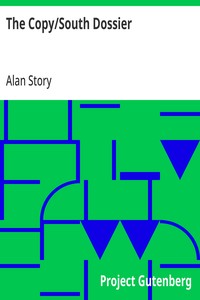
This digital edition of The Copy/South Dossier Issues in the economics, politics, and ideology of copyright in the global South — A Reader’s Guide is described by source-level measurements including 3,141 words, 14 min estimated reading time, and 1 detected text section.
The text analysis averages about 26.2 words per sentence, while the detected sections provide another way to judge how the source is divided.
Project Gutenberg metadata also associates the work with “Copyright, International,” connecting these edition facts with the source record’s subject description.
Explore this collection
These alternatives are selected using recorded categories and estimated reading time.
About 42 minutes
Adventure Picaresque Fiction
9,638 recorded words. 28 minutes difference from this book's estimate.
View Gutenberg source #29211About 58 minutes
Adventure Picaresque Fiction
13,268 recorded words. 44 minutes difference from this book's estimate.
View Gutenberg source #6580About 75 minutes
Adventure Picaresque Fiction
17,221 recorded words. 61 minutes difference from this book's estimate.
View Gutenberg source #20666Search stored excerpts and compare books → Choose by your preferences →
Choices use stored catalog measurements. Estimates vary with reading speed. A shared category is a catalog label, not a claim that two books have the same argument or literary quality.
Search reads excerpt text stored with this catalog and links to its associated Gutenberg record. The connection is stored in the site database; this tool does not recheck that every excerpt is word-for-word identical to that external record. Excerpt search does not cover every chapter and does not verify historical publication dates.
Catalog snapshot checked: 2026-09-26. Coverage: 99 public books, 99 available source excerpts.
Calculated from edition completeness, EPUB availability, text structure and catalogue metadata. Not a user rating.
Total of 100 points, scaled to a 2.5-5.0 range. Editions with an empty description or a missing EPUB file are not scored.
Issues in the economics, politics, and ideology of copyright in the global South
Edited by Alan Story Colin Darch and Debora Halbert
Researched and published by The Copy/South Research Group May 2006
This is marked as "Not Restricted by Copyright," which Project Gutenberg interprets as a grant to the public domain.
Please see the RTF or PDF files for this eBook, which was downloaded in September 2007 from: http://www.copysouth.org
The Project Gutenberg record for The Copy/South Dossier lists its subjects as “Copyright, International” and “Copyright – Economic aspects,” with a secondary topic of “politics-government.” Yet the text available in this digital edition consists almost entirely of the Project Gutenberg license and distribution terms, not the dossier itself. The only content from the original work is the title page, editor credits, and a note that the file was downloaded from copysouth.org in September 2007. This discrepancy between catalog description and delivered text raises immediate questions about what the dossier actually contains and how its arguments about copyright in the global South might have been structured.
The catalog subjects promise analysis of international copyright law and its economic dimensions, particularly as they affect the global South. However, the excerpts provided contain none of that analysis. Instead, the text is dominated by the Project Gutenberg License, including sections on trademark use, royalty payments, and donation requests. The only metadata from the original dossier is the title, editor (Alan Story), researchers (Colin Darch and Debora Halbert), and the publication date (May 2006). The phrase “Not Restricted by Copyright” appears, which Project Gutenberg interprets as a grant to the public domain. This is a striking irony for a work about copyright: the digital edition’s content is overshadowed by the legal framework that enables its distribution.
Despite the absence of the dossier’s body, the title page offers clues. The subtitle, “Issues in the economics, politics, and ideology of copyright in the global South,” signals a multidisciplinary approach. The research group’s name, “Copy/South Research Group,” suggests a collective effort. The fact that the dossier was published in 2006 places it in a period of active debate over intellectual property and development, following the 2001 Doha Declaration on TRIPS and public health. The editor’s choice to mark the work “Not Restricted by Copyright” aligns with a critical stance toward expansive copyright regimes. However, without the actual chapters, we cannot verify whether the dossier delivers on its stated scope or how it engages with specific legal cases or economic data.
The Project Gutenberg license, which constitutes the bulk of the text, becomes an unintentional commentary on the dossier’s themes. It details the conditions under which the work may be copied, distributed, or modified, including royalty fees for commercial use and trademark restrictions. This legal apparatus mirrors the very issues the dossier presumably critiques: the complexity of copyright law, the power of licensing, and the barriers to access. The license’s emphasis on U.S. law and its repeated references to “the laws of the country where you are located” highlight the jurisdictional fragmentation that the global South faces. Yet the license is a generic template, not specific to the dossier, so its relevance is incidental rather than intentional.
Readers seeking the actual Copy/South Dossier will need to consult the original source at copysouth.org or other archives. This Project Gutenberg edition, while legally interesting as a paratextual artifact, does not contain the substantive arguments promised by its catalog subjects. Approach this record as a case study in how digital libraries can misrepresent works through metadata and incomplete texts, rather than as a direct source on copyright economics in the global South.
I once catalogued The Copy/South Dossier, expecting one truth but finding only its blank face — a promise of pages that never came. It reminded me of another shelved friend, Behind the prison bars — Reading Notes, where the margins speak louder than the printed words. Both keep a quiet company of absence, whispering what they cannot say.
Build a private reading journal entry for this title.