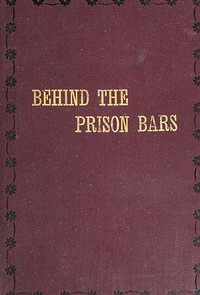
E. E. Byrum's Behind the Prison Bars (1901) opens with a preface that frames the book not as a comprehensive study but as a call to action, a “reminder of our duties” toward prisoners. The work’s structure mirrors this purpose: it alternates between institutional descriptions—warden’s rules, library regulations, and prison statistics—and personal testimonies from inmates, often identified only by serial numbers. This juxtaposition creates a rhythm of distance and intimacy, moving from the cold language of rulebooks to the warm gratitude of letters.
Rules and Their Counterpoint
The book frequently reproduces official documents, such as Warden S. A. Hawk’s seven library rules, which specify that books “will be issued for not longer than one week” and that violators will be “black-listed.” These rules are presented without commentary, yet they are immediately followed by letters from prisoners expressing thanks for donated literature. The effect is a structural tension: the rigid, numbered rules are answered by the spontaneous, numbered gratitude of inmates. Byrum does not explicitly critique the rules but lets the juxtaposition speak. The recurrence of the number “seven” in the rules and the serial numbers of prisoners (e.g., “Serial No. 2282”) creates a subtle pattern of order and individuality.
The Library as a Recurring Image
Throughout the excerpts, the prison library appears as a central, almost symbolic space. Warden Hawk describes a “library room 40×40 feet, handsomely furnished and fully equipped,” with some 10,000 volumes. This image of a well-appointed room recurs in contrast to the confinement of cells. The library becomes a threshold between punishment and reform, a place where “exemplary” prisoners gain “free access to books, magazines, and papers, after working hours.” Byrum’s focus on the library’s physical dimensions and furnishings grounds the reformist argument in tangible detail. The recurring mention of donated literature—from the Wheeling Intelligencer to the Gospel Trumpet—reinforces the book’s central plea for public involvement.
Movement Between Scenes: From Cell to Classroom
The book’s structure frequently shifts between confined spaces and sites of learning. The preface mentions prisoners “behind the prison-bars, unable to help themselves,” but later sections describe an evening school with sixty pupils, “the hours being from 5 to 7.30 p. m.” This movement from static imprisonment to active education is mirrored in the biography of Serial No. 2282, a life-term inmate who becomes a Bible-class leader. Byrum traces his trajectory from crime to “exemplary” prison record, emphasizing his “warm and tender heart.” The shift is not just thematic but structural: the book moves from general rules to specific cases, from the warden’s voice to the prisoner’s own words, creating a layered portrait of reform.
The Rhetoric of Keys and Bonds
Byrum’s language is marked by recurring metaphors of binding and release. The epigraph, “Remember them that are in bonds, as bound with them,” sets the tone. In the preface, he speaks of “loose the binding powers of sin,” and later, letters from prisoners describe feeling “encouraged” and “hopeful.” The image of keys appears implicitly in the library rules and explicitly in the warden’s “new and more liberal system of discipline.” Byrum does not dwell on physical shackles but on the bonds of neglect and ignorance. The book’s own structure—moving from problem to solution, from rule to testimony—enacts a kind of unlocking, offering readers a key to understanding prison life through documentary evidence.
Readers approaching Behind the Prison Bars should attend to its documentary layers: the official rules, the inmate letters, and the reformist commentary. Byrum’s method is cumulative rather than argumentative; he lets the documents speak, often without explicit interpretation. The book’s value lies in its raw material—the voices of prisoners and wardens—rather than in its analysis. For those interested in early twentieth-century prison reform or the rhetoric of philanthropy, this work offers a unique, firsthand glimpse into the operations of a West Virginia penitentiary and the moral appeals that surrounded it.
Years ago, I shelved Behind the Prison Bars beside a life of John Marshall, and they seemed to whisper to one another. Both books understand that law is not cold stone but living breath, moving through keys, bonds, and doors—opening slowly, with patience. Marshall's quiet decisions echo Byrum's opened gates. John Marshall — Reading Notes holds that same hush. I remember that shelf fondly.