About 276 minutes
Six Years in the Prisons of England — Context and Discussion
Fantasy Juvenile Worlds
63,345 recorded words. 18 minutes difference from this book's estimate.
View Gutenberg source #21284
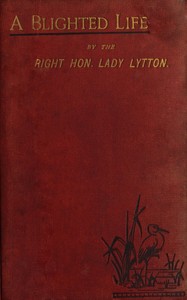
The source record for A blighted life — Themes and Context measures this digital text at 59,231 words, 4 hr 18 min estimated reading time, and 11 detected text sections.
The text analysis averages about 28.2 words per sentence, while the detected sections provide another way to judge how the source is divided.
Project Gutenberg metadata also associates the work with “Authors, English -- 19th century -- Biography,” connecting these edition facts with the source record’s subject description.
Explore this collection
These alternatives are selected using recorded categories and estimated reading time.
About 276 minutes
Fantasy Juvenile Worlds
63,345 recorded words. 18 minutes difference from this book's estimate.
View Gutenberg source #21284About 287 minutes
Fantasy Juvenile Worlds
65,916 recorded words. 29 minutes difference from this book's estimate.
View Gutenberg source #51049About 288 minutes
Fantasy Juvenile Worlds
66,049 recorded words. 30 minutes difference from this book's estimate.
View Gutenberg source #56112Search stored excerpts and compare books → Choose by your preferences →
Choices use stored catalog measurements. Estimates vary with reading speed. A shared category is a catalog label, not a claim that two books have the same argument or literary quality.
Search reads excerpt text stored with this catalog and links to its associated Gutenberg record. The connection is stored in the site database; this tool does not recheck that every excerpt is word-for-word identical to that external record. Excerpt search does not cover every chapter and does not verify historical publication dates.
Catalog snapshot checked: 2026-09-26. Coverage: 99 public books, 99 available source excerpts.
Calculated from edition completeness, EPUB availability, text structure and catalogue metadata. Not a user rating.
Total of 100 points, scaled to a 2.5-5.0 range. Editions with an empty description or a missing EPUB file are not scored.
Public-domain source text
The source text is kept in the dedicated reader, separate from this catalogue record and its commentary.
The preface to A Blighted Life immediately frames the volume as a weapon: it promises to expose “persecution of the most base and unmanly kind” practiced by a “wicked Man of great talent and resources” upon a “Noble Lady.” The editor’s language is openly partisan, denouncing the husband’s “odious countenance” and calling the son’s conduct a matter for public judgment. This is not a neutral biography but a polemical memoir, published in 1880 by the London Publishing Office, with three portraits offered as physiognomic evidence.
The excerpts from Lady Lytton’s own narrative confirm that combative tone. She writes in a breathless, furious style, peppered with dashes, italics, and direct addresses to the reader. Her account is dense with named individuals, legal maneuvers, and accusations of conspiracy—a personal history that reads like a courtroom indictment.
The catalog subjects list this work under “Authors, English – 19th century – Biography” and “Women and literature – England – History – 19th century.” Yet the excerpts do not offer a conventional literary life. Lady Lytton does not discuss her writing process, her novels, or her place in literary circles. Instead, the narrative is a legal and emotional chronicle: she describes being “kidnapped,” “hurried out of the country like a condemned felon,” and subjected to “shuffles” over financial settlements. The biographical details that appear are those that serve her case—her son’s failure to act as trustee, a publisher’s unauthorized reissue of her novel, and the “infamous Lunacy Laws” that allowed a husband to confine a wife on two medical certificates. The memoir’s structure is driven by grievance, not chronology.
Lady Lytton’s prose is distinctive: repetitive, exclamatory, and laced with sarcasm. She calls her husband “Sir Liar,” refers to a female confidante as “that old Spy,” and describes her son’s behavior as “the first terrible wrench my affection … got.” Her sentences often run on, linked by dashes and rhetorical questions: “What does this fresh shuffle mean? did you not explicitly tell me …?” She addresses the reader directly (“as you shall hear presently”) and uses italics for emphasis. This is not the measured tone of a memoirist seeking sympathy; it is the voice of someone still fighting, still furious. The editor’s preface claims the book will be “useful” as a record of persecution, and Lady Lytton’s own words bear that out—every paragraph is evidence for her case.
The catalog subjects do not mention the book’s central preoccupation: the lunacy laws and the accusation that her husband and son conspired to have her confined. The preface rails against “the infamous Lunacy Laws” and claims “thousands of persons, perfectly sane, are now imprisoned in private asylums.” Lady Lytton’s own narrative repeatedly returns to legal documents, promises broken, and the difficulty of securing a trustee. The word “blighted” in the title refers not to her literary career but to her life as a wife and mother. The excerpts also reveal a strong interest in physiognomy—the preface urges readers to study the portraits for evidence of character—a detail absent from the catalog. Readers expecting a standard literary biography will find instead a legal brief, a cry of injustice, and a portrait of a marriage as a battlefield.
A Blighted Life demands to be read as a document of its moment—a personal testimony shaped by the 1880s campaign against lunacy law abuses. Lady Lytton’s voice is raw, repetitive, and relentless; the reader must decide how much weight to give her accusations. The book is not a polished autobiography but a piece of evidence, and its value lies in that unvarnished urgency. Approach it as you would a courtroom statement, not a reflective memoir.
Reading Rosina Bulwer Lytton’s memoir, I kept thinking how her fight for her own words—against her husband and son—was never just about the marriage. It was about who got to tell the story. That’s what makes the dry bones of Copyright Law of the United States of America and Related Laws Contained in Title 17 of the United States Code, Circular 92 — Story, Setting & Ideas feel strangely tender: it’s the quiet legal promise that a voice can belong to its owner. I hadn’t expected to find that comfort there.
Answer a few questions and save a private reflection on this device.