About 34 minutes
The Will of Samuel Appleton, with Remarks by One of the Executors — A Closer Reading
Science Fiction Utopias
7,745 recorded words. 0 minutes difference from this book's estimate.
View Gutenberg source #33362
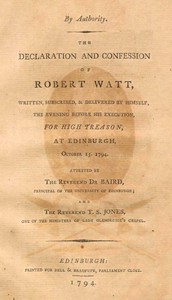
Before opening The declaration and confession of Robert Watt — Edition Insights, the edition data offers a quick orientation: 7,743 words, 34 min estimated reading time, and 6 detected text sections.
The text analysis averages about 26.7 words per sentence, while the detected sections provide another way to judge how the source is divided.
Project Gutenberg metadata also associates the work with “Watt, Robert, -1794 -- Trials, litigation, etc.,” connecting these edition facts with the source record’s subject description.
Explore this collection
These alternatives are selected using recorded categories and estimated reading time.
About 34 minutes
Science Fiction Utopias
7,745 recorded words. 0 minutes difference from this book's estimate.
View Gutenberg source #33362About 35 minutes
Science Fiction Utopias
7,890 recorded words. 1 minutes difference from this book's estimate.
View Gutenberg source #26870About 19 minutes
Science Fiction Utopias
4,248 recorded words. 15 minutes difference from this book's estimate.
View Gutenberg source #51894Search stored excerpts and compare books → Choose by your preferences →
Choices use stored catalog measurements. Estimates vary with reading speed. A shared category is a catalog label, not a claim that two books have the same argument or literary quality.
Search reads excerpt text stored with this catalog and links to its associated Gutenberg record. The connection is stored in the site database; this tool does not recheck that every excerpt is word-for-word identical to that external record. Excerpt search does not cover every chapter and does not verify historical publication dates.
Catalog snapshot checked: 2026-09-26. Coverage: 99 public books, 99 available source excerpts.
Calculated from edition completeness, EPUB availability, text structure and catalogue metadata. Not a user rating.
Total of 100 points, scaled to a 2.5-5.0 range. Editions with an empty description or a missing EPUB file are not scored.
Public-domain source text
The source text is kept in the dedicated reader, separate from this catalogue record and its commentary.
Robert Watt wrote this declaration on the evening of October 14, 1794, inside Edinburgh Castle, knowing he would be executed the next day for high treason. The text, attested by two clergymen, is presented as a verbatim transcription of his manuscript. Watt frames his narrative as a service to religion, Christian acquaintances, and his country, promising a concise history of the most material part of his life. The document is both a legal confession and a spiritual testament, composed under extreme temporal pressure—Watt notes that even writing a sentence consumes one of his remaining minutes.
Watt repeatedly emphasizes the imminence of his death: he has but four days before absorption into eternity, and later, only minutes of life remain. This temporal urgency shapes the entire declaration. He insists that his account must be received as truth because, on the brink of eternity, he cannot approach the Omnipotent with a lie. The document is explicitly a first copy, with no time to revise or correct. Watt’s awareness of his audience—those who now read or hear of this account—adds a layer of direct address, urging them to remember that death will come to them as it has to him. The pressure of the occasion is not merely rhetorical; it governs the text’s structure and its claims to authenticity.
Watt offers a self-portrait that resists simple moral categorization. He describes his mind as compounded of pride and ambition, yet claims that sympathy for the unfortunate was one cause of his actions. He acknowledges that he erred in taking an active part without weighing probable consequences, and that bloodshed and rapine might have ensued. His language oscillates between self-justification and self-condemnation: he insists he gave no private offence and had upright intentions toward creditors, while also confessing that his departures from God are innumerable and highly aggravated. This tension between a sympathetic, enterprising spirit and a recognition of guilt runs through the narrative, suggesting a man struggling to reconcile his public actions with his private conscience.
Watt’s declaration concludes with a turn toward orthodox Christian submission. He quotes scripture—to lead quiet and peaceable lives—and asserts that the reformation of state abuses should be left to those who mind earthly things, except when called to assist in a legal manner. He blesses God for preventing him from going the awful length his ambitious mind might have induced. This retreat from political activism is coupled with a plea for forgiveness from fellow Christians and a prayer for subordination and loyalty among the people. The document thus moves from a detailed (though here excerpted) personal history to a final, public renunciation of the very enterprising spirit that Watt earlier acknowledged as part of his character. The shift is abrupt, perhaps reflecting the pressure of the occasion and the desire to leave a pious final impression.
Readers should approach this declaration as a document shaped by its extreme circumstances: a man writing under sentence of death, aware that his words will be scrutinized both by earthly authorities and by God. The text is not a straightforward confession but a layered performance of repentance, self-accounting, and spiritual appeal. Pay attention to the gaps—what Watt chooses to mention and what he withholds, such as the views he had for paying creditors that he deems improper to disclose. The declaration is as much about the act of writing under duress as it is about the events it describes.
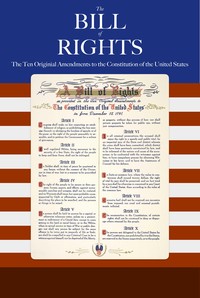
Reading Robert Watt’s last words, I kept thinking how desperately he wanted his story told straight, and yet how tangled it came out. There’s something humbling in that. Alongside it, I left The United States Bill of Rights The Ten Original Amendments to the Constitution of the United States — Edition Insights on my desk, and I understood—founding documents are just people trying to get it right, too, often in the same breath as failing.
Build a private reading journal entry for this title.