About 19 minutes
Federal Stamp Taxes on Drafts, Checks and Promissory Notes, 1919 — A Reader’s Guide
Science Fiction Utopias
4,248 recorded words. 3 minutes difference from this book's estimate.
View Gutenberg source #51894
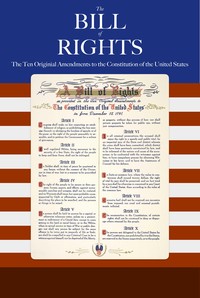
The source record for The United States Bill of Rights The Ten Original Amendments to the Constitution of the United States — Edition Insights measures this digital text at 3,557 words, 16 min estimated reading time, and 1 detected text section.
The text analysis averages about 27.6 words per sentence, while the detected sections provide another way to judge how the source is divided.
Project Gutenberg metadata also associates the work with “Civil rights -- United States -- Sources,” connecting these edition facts with the source record’s subject description.
Explore this collection
These alternatives are selected using recorded categories and estimated reading time.
About 19 minutes
Science Fiction Utopias
4,248 recorded words. 3 minutes difference from this book's estimate.
View Gutenberg source #51894About 34 minutes
Science Fiction Utopias
7,745 recorded words. 18 minutes difference from this book's estimate.
View Gutenberg source #33362About 34 minutes
Science Fiction Utopias
7,743 recorded words. 18 minutes difference from this book's estimate.
View Gutenberg source #70332Search stored excerpts and compare books → Choose by your preferences →
Choices use stored catalog measurements. Estimates vary with reading speed. A shared category is a catalog label, not a claim that two books have the same argument or literary quality.
Search reads excerpt text stored with this catalog and links to its associated Gutenberg record. The connection is stored in the site database; this tool does not recheck that every excerpt is word-for-word identical to that external record. Excerpt search does not cover every chapter and does not verify historical publication dates.
Catalog snapshot checked: 2026-09-26. Coverage: 99 public books, 99 available source excerpts.
Calculated from edition completeness, EPUB availability, text structure and catalogue metadata. Not a user rating.
Total of 100 points, scaled to a 2.5-5.0 range. Editions with an empty description or a missing EPUB file are not scored.
Public-domain source text
The source text is kept in the dedicated reader, separate from this catalogue record and its commentary.
The United States Bill of Rights, as presented in this Project Gutenberg edition, consists of the ten original amendments to the Constitution, passed by Congress on September 25, 1789, and ratified on December 15, 1791. The text is reproduced without editorial commentary, allowing the reader to engage directly with the precise language of the amendments. The document opens with the First Amendment's prohibitions on laws respecting an establishment of religion or abridging freedom of speech, press, assembly, and petition. The Second Amendment asserts the right to keep and bear arms in connection with a well-regulated militia. The Third Amendment restricts the quartering of soldiers in private homes without consent. The Fourth Amendment protects against unreasonable searches and seizures, requiring warrants based on probable cause. The Fifth Amendment outlines grand jury indictment, double jeopardy, self-incrimination, due process, and just compensation for takings. The Sixth Amendment guarantees a speedy and public trial, impartial jury, and the right to counsel. The Seventh Amendment preserves jury trials in civil cases exceeding twenty dollars. The Eighth Amendment prohibits excessive bail, fines, and cruel and unusual punishments. The Ninth and Tenth Amendments clarify that the enumeration of rights does not deny others retained by the people, and that powers not delegated to the federal government are reserved to the states or the people.
The amendments employ a distinctive grammatical structure: prohibitions and limitations are expressed through negative constructions. The First Amendment begins with "Congress shall make no law," a formulation that immediately establishes a boundary on legislative power. The Second Amendment uses "shall not be infringed," the Third "No soldier shall... be quartered," and the Fourth "shall not be violated." This pattern of negation recurs throughout, creating a document that defines rights by what government cannot do. The Fifth Amendment's phrase "nor shall be compelled in any criminal case to be a witness against himself" exemplifies the careful layering of prohibitions. The Eighth Amendment's "Excessive bail shall not be required" continues the pattern. This consistent use of negative phrasing shapes the reader's understanding of rights as protections against government action rather than positive entitlements.
Several amendments include qualifying language that narrows or conditions the rights they describe. The Second Amendment's right to bear arms is prefaced by "A well-regulated militia, being necessary to the security of a free State," a clause that has generated extensive interpretation. The Fourth Amendment prohibits "unreasonable" searches and seizures, leaving the term undefined. The Fifth Amendment's due process clause applies to deprivations of "life, liberty, or property," and the takings clause requires "just compensation." The Sixth Amendment specifies a trial "by an impartial jury of the State and district wherein the crime shall have been committed, which district shall have been previously ascertained by law." These modifiers and conditions reveal that the framers anticipated the need for flexibility and judicial interpretation, embedding within the text the seeds of later legal debates.
The amendments are organized as a numbered list, each beginning with a Roman numeral. Within individual amendments, parallel structures create rhythm and clarity. The First Amendment enumerates five distinct prohibitions in a single sentence: religion, speech, press, assembly, and petition. The Fifth Amendment lists multiple protections in a series of clauses separated by semicolons: grand jury indictment, double jeopardy, self-incrimination, due process, and just compensation. The Sixth Amendment similarly strings together rights to speedy trial, public trial, impartial jury, notice of accusation, confrontation, compulsory process, and counsel. This enumerative style reflects an effort to be comprehensive while maintaining syntactic economy. The Ninth and Tenth Amendments, by contrast, are single declarative sentences that serve as interpretive principles for the entire document.
The Ninth and Tenth Amendments depart from the specific prohibitions of the first eight. The Ninth states that "The enumeration in the Constitution, of certain rights, shall not be construed to deny or disparage others retained by the people." This amendment acknowledges that the list of rights is not exhaustive. The Tenth reserves to the states or the people powers not delegated to the federal government. Together, these amendments provide a structural principle: the federal government is one of limited, enumerated powers, and rights extend beyond those explicitly listed. Their placement at the end of the Bill of Rights serves as a capstone, reminding readers that the document is not a complete code but a foundation. The language is general, inviting ongoing interpretation about the scope of retained rights and reserved powers.
This edition presents the Bill of Rights without annotation or commentary, offering an unmediated encounter with the text. Readers may wish to consider how the precise wording of each amendment has shaped subsequent legal interpretation and public debate. The document's brevity—fewer than 500 words—belies its enduring significance as a cornerstone of American constitutional law.
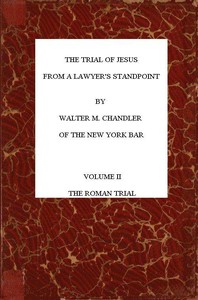
That rainy afternoon, I kept returning to the spare, deliberate language of the amendments—how justice hinges on precise words. The stillness reminded me of another courtroom, one where every phrase carried weight. Later, almost by accident, I found The Trial of Jesus from a Lawyer's Standpoint, Vol. 2 (of 2) The Roman Trial — Reading Companion on the shelf, and the afternoon quietly stretched on.
Use these questions to collect your thoughts before moving on.