About 354 minutes
Millbank Penitentiary: An Experiment in Reformation — Background and Themes
Science Fiction Utopias
81,254 recorded words. 1 minutes difference from this book's estimate.
View Gutenberg source #49230
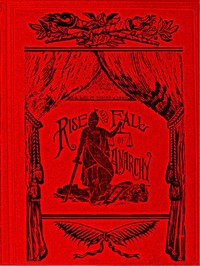
The Rise and Fall of Anarchy in America From its Incipient Stage to the First Bomb Thrown in Chicago — Story, Setting & Ideas can be approached with a clearer sense of reading commitment from its source measurements: 81,568 words, 5 hr 55 min estimated reading time, and 27 detected text sections.
The text analysis averages about 18.0 words per sentence, while the detected sections provide another way to judge how the source is divided.
Project Gutenberg metadata also associates the work with “Anarchists -- United States,” connecting these edition facts with the source record’s subject description.
Explore this collection
These alternatives are selected using recorded categories and estimated reading time.
About 354 minutes
Science Fiction Utopias
81,254 recorded words. 1 minutes difference from this book's estimate.
View Gutenberg source #49230About 376 minutes
Science Fiction Utopias
86,431 recorded words. 21 minutes difference from this book's estimate.
View Gutenberg source #56907About 473 minutes
Science Fiction Utopias
108,731 recorded words. 118 minutes difference from this book's estimate.
View Gutenberg source #40967Search stored excerpts and compare books → Choose by your preferences →
Choices use stored catalog measurements. Estimates vary with reading speed. A shared category is a catalog label, not a claim that two books have the same argument or literary quality.
Search reads excerpt text stored with this catalog and links to its associated Gutenberg record. The connection is stored in the site database; this tool does not recheck that every excerpt is word-for-word identical to that external record. Excerpt search does not cover every chapter and does not verify historical publication dates.
Catalog snapshot checked: 2026-09-26. Coverage: 99 public books, 99 available source excerpts.
Calculated from edition completeness, EPUB availability, text structure and catalogue metadata. Not a user rating.
Total of 100 points, scaled to a 2.5-5.0 range. Editions with an empty description or a missing EPUB file are not scored.
Public-domain source text
The source text is kept in the dedicated reader, separate from this catalogue record and its commentary.
George N. McLean's 1888 work opens with the epigraph “Order is Heaven’s First Law” and immediately frames anarchism as a conspiracy to be exposed rather than a philosophy to be understood. The title page promises a “comprehensive account” from the “incipient stage” to the first bomb thrown in Chicago, setting a tone of moral certainty that pervades the narrative. The book is structured around the Haymarket affair, but its focus is less on the events of May 4, 1886, than on the legal proceedings that followed.
McLean devotes extensive space to the trial, reproducing arguments from both prosecution and defense, and includes the judge's instructions to the jury. These passages reveal a key legal innovation: the conviction did not require proof that the defendants threw the bomb or knew it would be thrown, but that their speeches and writings had generally advised murder, leaving “the occasion, time and place to the individual will.” This editorial note examines how McLean's language, narrative voice, and shifts in pace shape the reader's understanding of the case.
From the first sentence, McLean adopts the voice of a prosecutor rather than a historian. The epigraph “Order is Heaven’s First Law” is not merely decorative; it announces a worldview in which anarchists are enemies of divine and civil order. The title itself—The Rise and Fall of Anarchy in America—implies a completed arc, with the fall already accomplished by the book’s publication in 1888. McLean rarely hedges. He refers to the defendants as “conspirators” and the Haymarket event as a “massacre,” terms that carry judgment. The narrative is punctuated with phrases like “There can be no doubt” and “It is impossible for an instant to support any such principle,” which close off alternative interpretations. This rhetorical strategy is consistent throughout, but it becomes most pronounced in the trial sections, where McLean interjects commentary into what purports to be straightforward reporting. The effect is to guide the reader toward a predetermined conclusion: that the anarchists were guilty not just of incitement but of murder, under a novel legal theory that the book endorses without reservation.
The book’s pacing varies dramatically between its early chapters and the trial account. The opening chapters move quickly, summarizing the “first agitation” and the Haymarket meeting in a few pages. But once the trial begins, the pace slows to a crawl. McLean reproduces long stretches of testimony, cross-examination, and closing arguments, often without condensation. For example, the judge’s instructions to the jury run for several pages, parsing the legal distinction between direct participation and accessory liability. This shift from brisk narrative to near-verbatim transcript creates a documentary effect, as if the reader is sitting in the courtroom. Yet McLean does not let the record speak for itself. He frames the defense’s efforts as “contesting every point by shrewd counsel” and “braving it out,” language that subtly undermines their legitimacy. The change in pace also reflects a change in purpose: the early chapters establish the threat, while the trial chapters aim to demonstrate that justice was served, albeit through an unprecedented legal argument. Readers interested in the mechanics of the trial will find the slow sections rewarding, but those seeking a concise history may find the detail overwhelming.
Throughout the excerpts, certain words and images recur with notable frequency. “Bomb” appears in the title, in chapter headings, and in the judge’s summation. “Dynamite” is mentioned alongside “prussic acid” as part of the anarchists’ advocated arsenal. McLean also emphasizes the physical presence of weapons in the courtroom: “Bombs in Court” is a chapter subheading. These details serve to keep the threat of violence constantly before the reader, even during the legal arguments. Another recurring motif is the idea of the “unlawful combination.” The judge’s instruction describes a chain of reasoning: strikers prevent others from working, police intervene, strikers kill police. This logical sequence is repeated in slightly different forms, reinforcing the prosecution’s theory of conspiracy. McLean also highlights the defendants’ own words, such as Parsons’s statement that he “won’t eat snowballs next winter,” which is presented as evidence of their defiant attitude. These repeated elements create a sense of inevitability, as if the bomb throw was the logical outcome of the anarchists’ rhetoric. The book’s language thus mirrors its legal argument: both treat speech as a form of action, and both demand that the reader accept the connection.
McLean’s account is best read as a primary source on how the Haymarket affair was presented to a contemporary audience sympathetic to the prosecution. The book’s value lies not in its objectivity—it has none—but in its detailed reproduction of trial arguments and its unvarnished expression of late-nineteenth-century anxieties about immigration, labor, and political violence. Readers should compare the judge’s instructions with modern conspiracy law and consider how McLean’s narrative choices shape the story. The excerpts are incomplete, but they reveal a work that is as much a legal brief as a history.
The rain flattened the city outside, and I stayed in with that old Haymarket account, tracing how the law stretched itself thin to convict. The weight of that courtroom lingered, so I found myself drifting, almost without deciding, toward Tragedy in Dedham — Edition Insights. It felt less like research, more like following one quiet, unsettling echo into another room.
Answer a few questions and save a private reflection on this device.